
ALL-ON-4 TREATMENT
General information about implant treatment that may be considered to support a fixed prosthesis when most teeth in one jaw are missing.
A Full-Arch Prosthetic Approach Supported by Four Implants
All-on-4 is an implant-supported fixed prosthetic approach used in cases where all teeth in one jaw are missing or where the existing teeth are being assessed as part of the treatment plan.
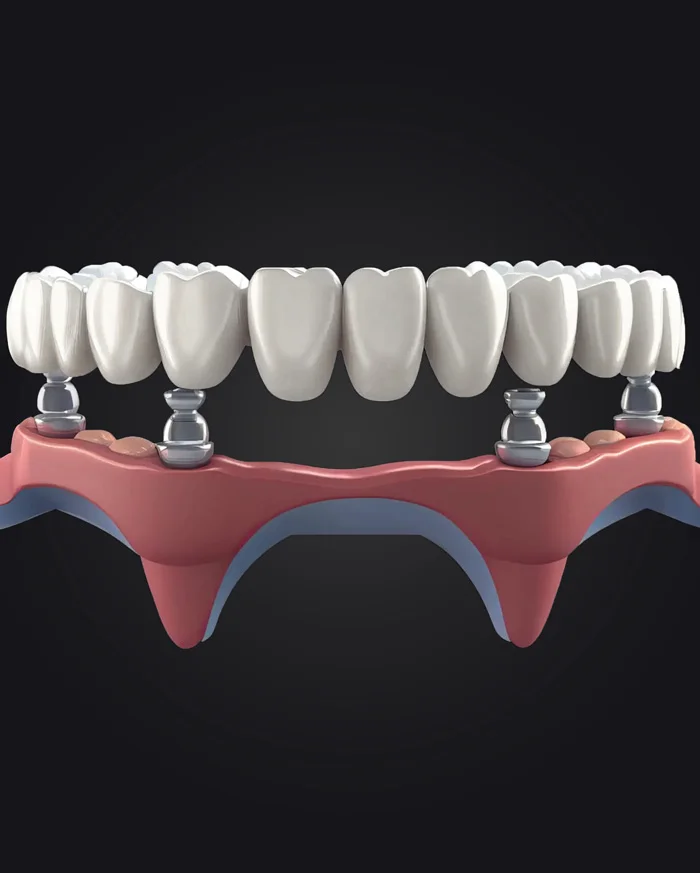
This method generally uses four implants to support a full-arch fixed prosthesis. The position and angle of the implants are determined through detailed planning based on the available bone structure and the proposed prosthesis.
Suitability for treatment is assessed by considering oral and gum health, the structure of the jawbone, general medical information and the patient’s needs together.
- May be considered when all teeth in one jaw are missing
- Used to support a full-arch fixed prosthesis
- The treatment plan is created following an individual examination
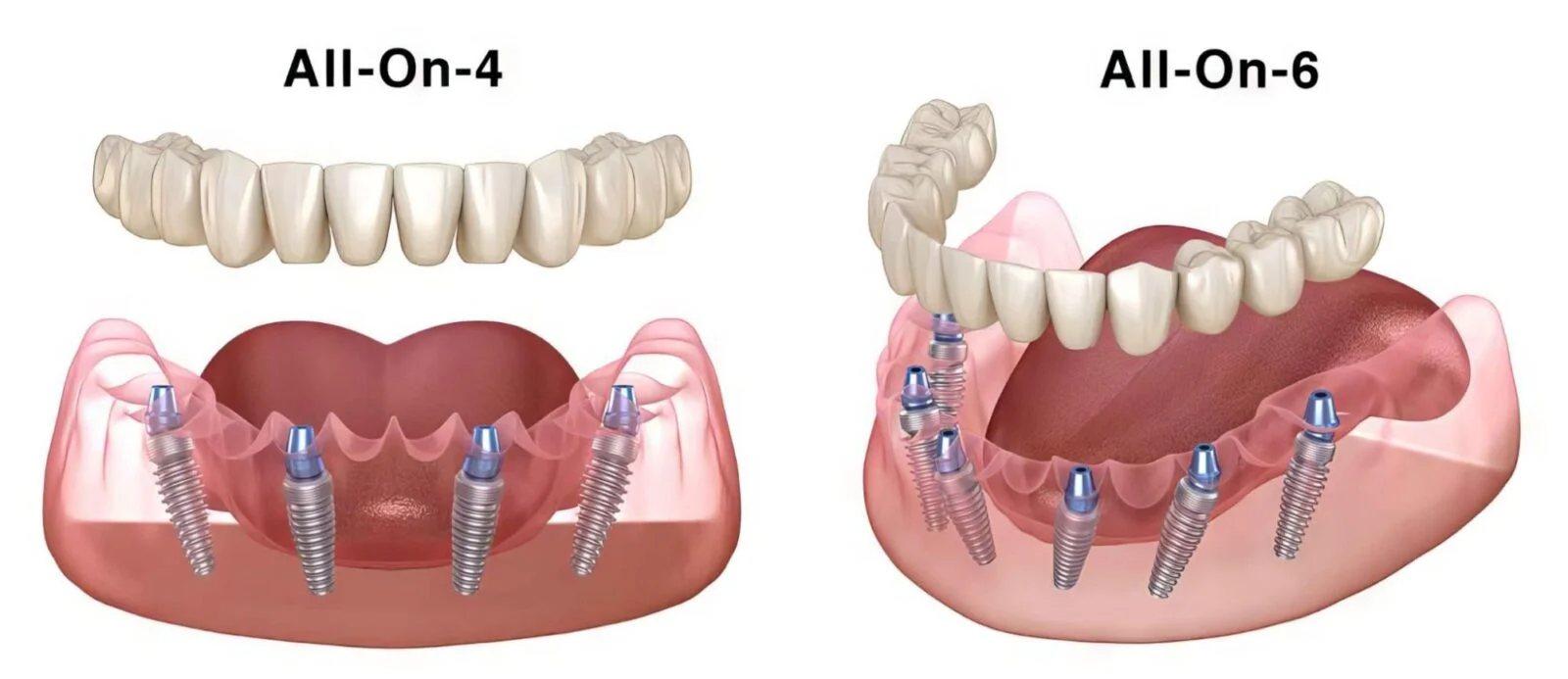
This image is for illustrative purposes. The number and position of implants and the prosthetic plan may vary according to the individual patient.
Who May Be Considered for All-on-4 Treatment?
All-on-4 treatment may be considered for patients who have lost all the teeth in one jaw or whose existing teeth are being assessed as part of a long-term treatment plan.
However, missing teeth alone are not sufficient to determine suitability. The structure of the jawbone, gum health, general medical history, medications and oral care habits are assessed together.
The patient’s expectations, the proposed prosthetic design and their ability to follow the recommended aftercare routine are also considered during the decision-making process.
CONDITION OF THE EXISTING TEETH
The number of missing teeth and whether the teeth remaining in the mouth can be preserved are assessed.
JAWBONE STRUCTURE
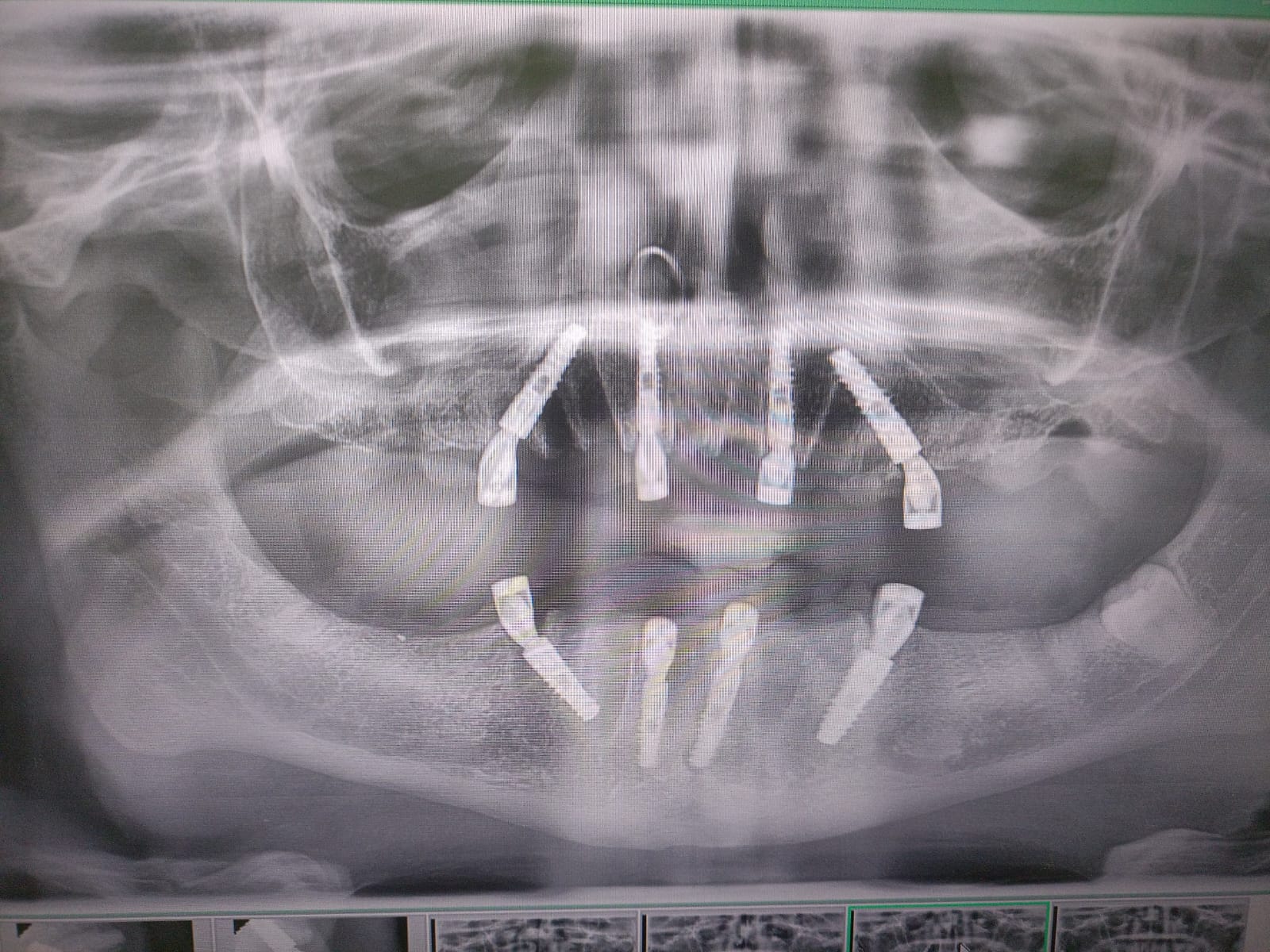
Imaging is used to assess whether the jawbone can provide sufficient support in the planned implant positions.
GUM AND ORAL HEALTH
Active infections, gum problems and oral hygiene are included in the treatment planning process.
GENERAL HEALTH AND HABITS
Medical history, medications and factors that may affect treatment, such as smoking, are discussed.
From Assessment to the Final Prosthesis
The sequence of procedures involved in All-on-4 treatment is determined individually according to the condition of the existing teeth, the jawbone and the proposed prosthesis.
01 — Examination and Digital Planning
Oral and gum health are assessed and the necessary imaging is obtained. The implant positions and the full-arch prosthesis to be placed over them are planned.
02 — Preparation Before Treatment
If teeth remain in the mouth, whether they can be preserved is assessed. Any necessary extractions, gum treatments or other preparatory procedures are included in the treatment plan.
03 — Implant Placement
The four implants specified in the treatment plan are placed into the jawbone. Their positions and angles are planned according to the bone structure and the requirements of the prosthesis.
04 — Assessment for a Temporary Prosthesis
When the implants achieve sufficient initial stability and the clinical conditions are appropriate, a temporary fixed prosthesis may be placed. Whether this is possible is determined through an assessment carried out during the procedure.
05 — Healing, Follow-Up and the Final Prosthesis
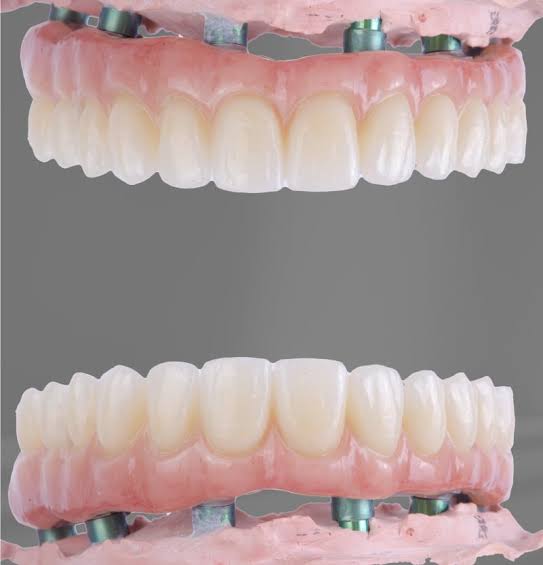
During the healing period, the implants, surrounding tissues and temporary prosthesis are regularly monitored. Once an appropriate stage of healing has been reached, impressions are taken, the final prosthesis is prepared and its fit is checked.
The treatment sequence, timing of the temporary prosthesis and transition to the final prosthesis may vary from patient to patient.
Regular Care for All-on-4 Prostheses
Following All-on-4 treatment, the areas surrounding the implants and beneath the full-arch prosthesis should be cleaned regularly. The dentist will demonstrate suitable cleaning methods and recommend appropriate supplementary oral care products according to the structure of the prosthesis.
DAILY CLEANING
The surface of the prosthesis, gum line and areas surrounding the implants should be cleaned regularly using the techniques recommended by the dentist.
CLEANING BENEATH THE PROSTHESIS
Interdental brushes, dental floss or an oral irrigator may be recommended to remove debris that can accumulate beneath the fixed prosthesis.
REGULAR CHECK-UPS
The implants, surrounding gum and bone tissues, prosthesis and bite should be checked at the intervals recommended by the dentist.
MONITORING THE PROSTHESIS AND COMPONENTS
The full-arch prosthesis and its connecting components may require adjustment, maintenance, repair or replacement over time.
Frequently Asked Questions About All-on-4
Is an All-on-4 prosthesis fixed?
All-On-4 yaklaşımında implantlar üzerine sabit bir tam çene protezi planlanır. Protezin hasta tarafından çıkarılması amaçlanmaz; gerekli durumlarda klinikte diş hekimi tarafından çıkarılabilir.
Can a temporary prosthesis be fitted on the same day?
Klinik koşullar uygun olduğunda ve implantlarda yeterli başlangıç stabilitesi sağlandığında geçici sabit protez uygulanması değerlendirilebilir. Bunun her hasta için mümkün olacağı önceden garanti edilemez.
Is bone grafting required for All-on-4 treatment?
Tedavi yaklaşımı bazı hastalarda kapsamlı kemik destekleyici işlemlere olan ihtiyacı azaltabilir. Ancak kemik yapısı ve anatomik koşullar kişiden kişiye değiştiği için ek işlem gereksinimi yalnızca muayene ve görüntüleme sonucunda belirlenebilir.
Are the temporary and final prostheses the same?
Hayır. Geçici protez iyileşme döneminde kullanılmak üzere hazırlanır. Kalıcı protez ise uygun iyileşmenin ardından ölçü, uyum, kapanış ve estetik değerlendirmeler yapılarak hazırlanır.
How should an All-on-4 prosthesis be maintained?
Protez yüzeyi, diş eti hattı, implant çevresi ve protezin altı düzenli olarak temizlenmelidir. Kullanılacak fırça, diş ipi veya diğer yardımcı bakım ürünleri protezin yapısına göre diş hekimi tarafından önerilir.
Book an Assessment for All-on-4 Treatment
Contact our clinic to have your oral and jaw structure assessed and to determine which treatment options may be suitable for you.